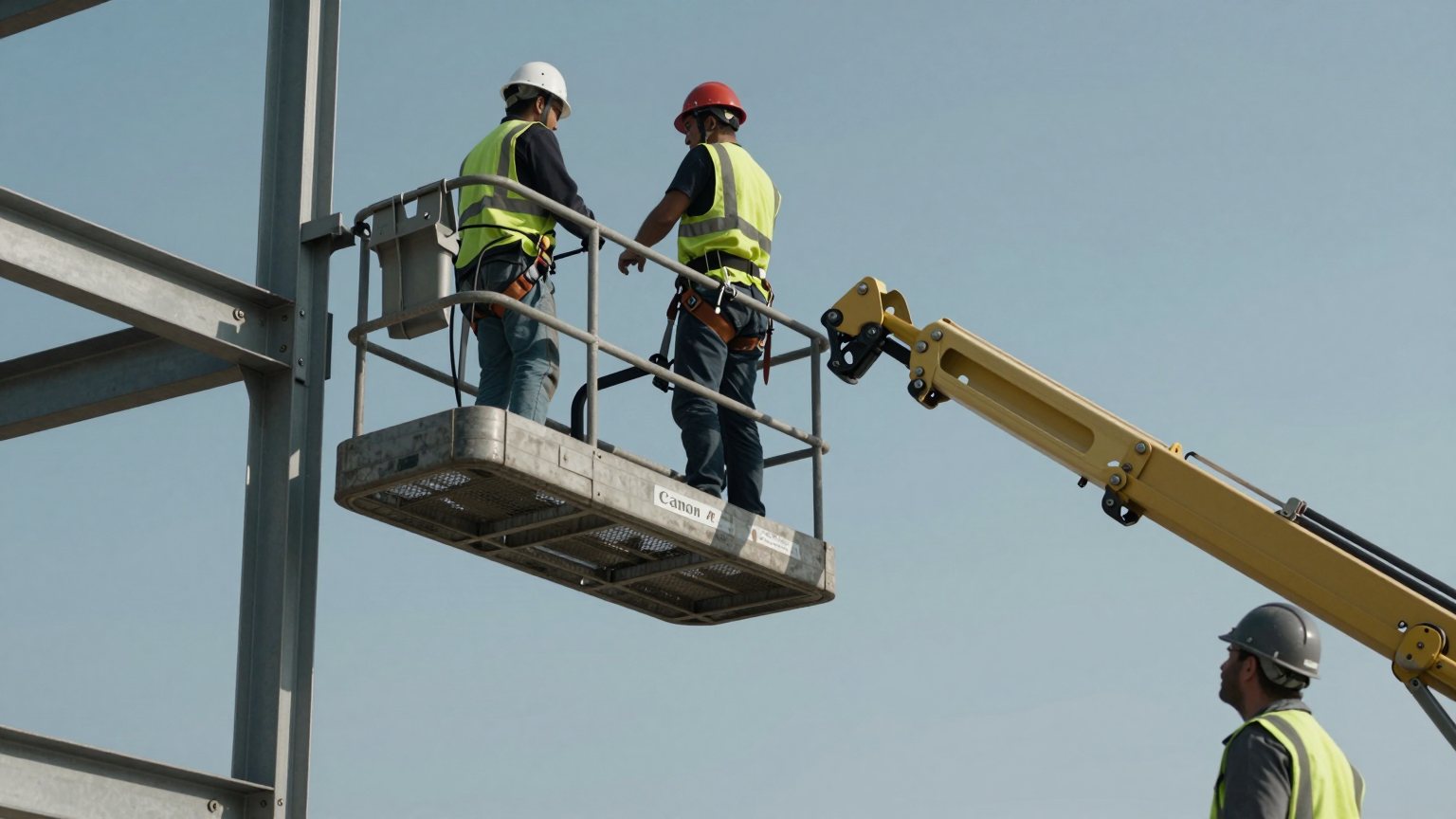
A crane is only as stable as the ground beneath it. When a mobile crane lifts at radius, most of the load can be carried by one or two outriggers, and the pressure under each pad can be far higher than many people expect.
Know the ground before you set up
Ask for information about buried services, backfilled trenches, voids, soft spots and recent rain. A site that carries delivery trucks perfectly well may still fail under a concentrated outrigger load.
Spread the load
Outrigger mats increase the bearing area so that the pressure on the ground stays within what it can safely support. The mat must be strong and stiff enough for the load, sit level, and be centred under the outrigger float.
- Use the outrigger loads from the crane manufacturer or lift-planning software.
- Compare them with the allowable ground bearing pressure for the site.
- Choose a mat size and type that keeps the applied pressure below that limit.
Never place outriggers near excavation edges, over drains or on unknown fill without an engineering assessment.
Ground bearing calculations are covered in ILEES lift-planning programmes, so planners can show — not just assume — that the ground will hold.